Table Of Content
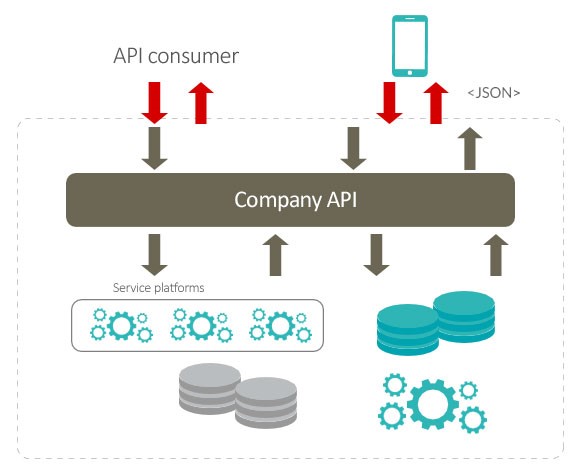
Affordance is the possibility of an action on an object or environment. An API with clear perceived affordance allows the developer to understand its purpose and to use it seamlessly inside the Cybernetic Environment it was designed for. Those are just two potential uses for your machine-readable API definition, in which you can create OpenAPI definition files using YAML or JSON. Stoplight Studio can read existing OpenAPI files from any git repo, and you can make edits—or start from scratch—within a beautiful editing environment.
Architectural Styles of APIs
It has a unique number for every character across multiple languages including Chinese, Korean, and Arabic, and their scripts. The unique number makes almost all characters identifiable and accessible across platforms, programs, and devices. Including the URI as part of the location header as the response to the newly created resource is another method of discoverability.
API Design Patterns: Best Practices for Building Resilient APIs
It should follow consistent style conventions, include built-in security mechanisms for authentication and data encryption, and reliably handle large volumes of traffic. Once you've completed your API definition, you can use it to generate mock servers. Mock servers return sample data in response to requests, which enables you to confirm that your API will work as you intend it to. Mocks can also be used alongside API tests, which can be run manually, on a schedule, or automatically within CI/CD pipelines. Testing and mocking during the API design process will help you catch and remediate any issues before they find their way into your consumers' codebases, when they are much more difficult to fix.
Software Application Architecture
A long and difficult-to-read base URL is not just bad to look at, but can also be prone to mistakes when trying to recode it. There’s no rule on keeping the resource nouns singular or plural, though it is advisable to keep collections plural. Having the same plurality across all resources and collections respectively for consistency is good practice.
Finally, we run filter on with each query parameter value to locate the items that we want to return. Filtering and pagination both increase performance by reducing the usage of server resources. As more data accumulates in the database, the more important these features become.
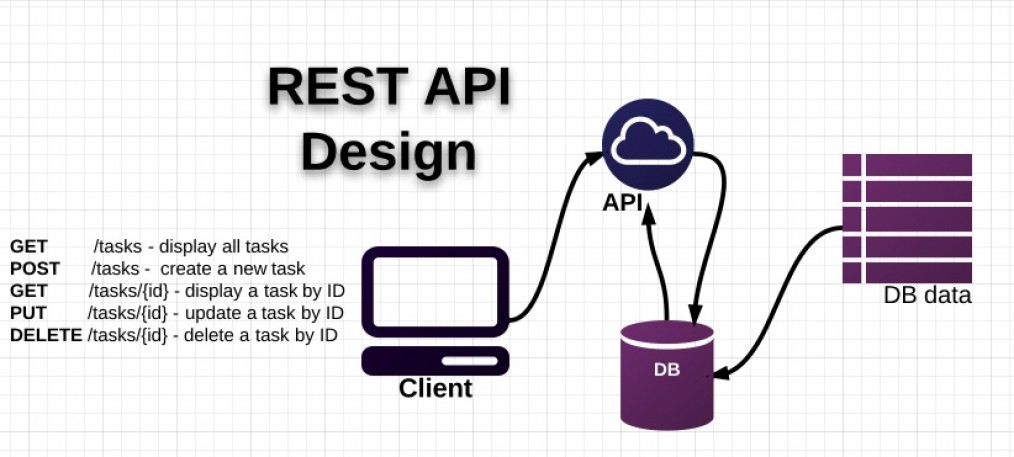
We filter all the records that are related to the workout id out of the query parameter. Chances are high that have we to implement CRUD endpoints for the records as well, because records should be added, updated or deleted in the future as well. I always imagine that the HTTP verb describes the action (what we'd like to do) and the URL itself (that points towards a resource) the target.
store.requestReadingListSpecificationForProduct(
RESTful API design is the process of designing an API that follows the principles of Representational State Transfer (REST), which is the most popular API architecture today. In a RESTful architecture, resources are identified by URIs (Uniform Resource Identifiers), and the client interacts with those resources with standard HTTP methods such as GET, POST, PUT, and DELETE. When designing an API service, data retention is a critical aspect of servicereliability. It is common that user data is mistakenly deleted by software bugsor human errors. Without data retention and corresponding undeletefunctionality, a simple mistake can cause catastrophic business impact. Sometimes an API client only needs a specific subset of data in theresponse message.
Practical API Design Using gRPC at Netflix - InfoQ.com
Practical API Design Using gRPC at Netflix.
Posted: Tue, 21 Sep 2021 07:00:00 GMT [source]
As you can see, we've added the two properties "memberId" and "member" to our records inside the database. This has the huge advantage that we don't have to nest deeper our existing endpoint. The endpoint now becomes less manageable the more nesting we add to it. Therefore it's a good practice to store the URI to receive information about a member directly into the record. Now we're able to create a new route in our workout router and direct the request to our record service.
A developer who is consuming the API is now better informed about what to look for. They immediately know to go inside the request body and see if they've missed providing one of the required properties. To improve the request validation you normally would use a third party package like express-validator. To be able to parse the sent JSON inside the request body, we need to install body-parser first and configure it. Again, I've chosen to name the method inside here the same as the one in the service and the controller. Because of its standardization, API's should accept and respond with data in JSON format.
It’s important to thoroughly understand how an API will be used and get feedback from collaborators, such as with mock API servers. As you design your API, you’ll want to rely on these methods to express the primary purpose of a call rather than adding the purpose to the RESTful API URL. Versioning is important in API design because it allows you to make changes to your API without breaking existing clients.
The documentation helps make developers' lives a lot easier, too. Inside the first middleware we'll check if the user is authenticated. If this is true, we'll go to the next middleware, that would be the one for checking the user's role. If the user has the appropriate role for accessing this resource the request is be passed to the corresponding controller.


No comments:
Post a Comment